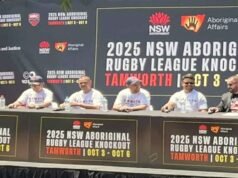
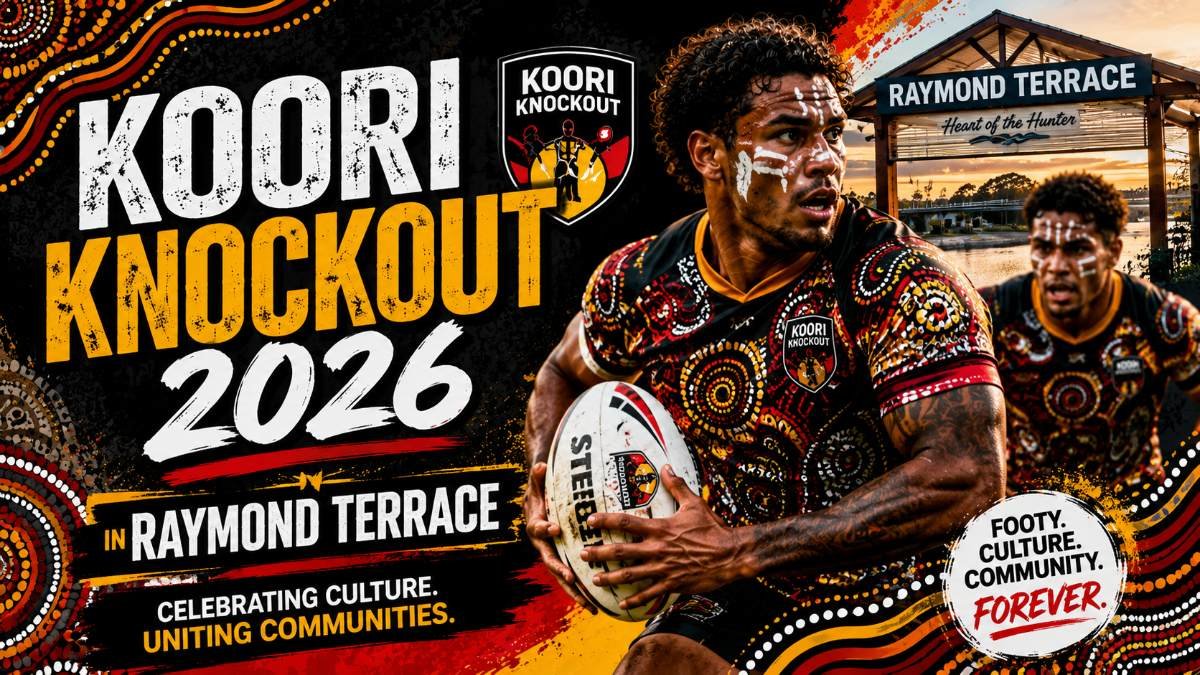
For 54 years running, one weekend on the rugby league calendar has meant something far bigger than football. The NSW Koori Knockout returns in 2026 for its 54th edition, heading to Raymond Terrace on Worimi Country in the Hunter region — a milestone carnival that organisers expect to be one of the largest in the tournament’s long history.
From a Pub Conversation to a National Institution
The story of the Koori Knockout begins in 1971, with six young Aboriginal men — Uncle Victor Wright, Bob Smith, Bob Morgan, Bill Kennedy, Danny Rose, and the late George Jackson — who set out to create a statewide competition for Aboriginal footballers. At the time, talented Aboriginal players were regularly overlooked by mainstream rugby league scouts, victims of both racism and a recruiting system that rarely looked beyond the big cities and established pathways. A handful of players broke through regardless — names like Bruce “La Pa” Stewart and field-goal specialist Eric Simms found their way into first grade — but for most, the barriers proved too high.
The Knockout was conceived as a remedy, but its founders always saw it as something bigger than a talent showcase. As original committee member Bob Morgan put it, the tournament was never simply about football — it was about family, about community, about bringing people together to celebrate rather than just compete. That founding philosophy is exactly why, more than five decades on, the carnival is still routinely described as a “modern-day corroboree” — a gathering where football is the excuse, but connection is the point.
Fifty-four years later, that original idea has grown almost beyond recognition in scale, while staying remarkably true to its roots. What started with a handful of teams now regularly draws close to 200 sides across men’s, women’s, and junior grades, with spectator numbers that rival many professional sporting fixtures.
Raymond Terrace: The 2026 Host
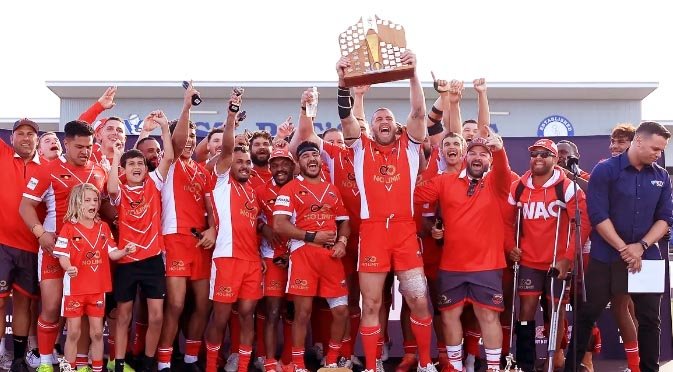
This year’s carnival runs from Friday 2 October to Monday 5 October, staged at Kings Park Sporting Complex in Raymond Terrace, within the Port Stephens region on Worimi Country. Hosting rights fell to the Newcastle Yowies, who earned the honour in the most emphatic way possible — sweeping four grand final titles at the 2025 carnival in Tamworth across the men’s, women’s, Under-15 girls, and Under-17 girls divisions.
It isn’t the Yowies’ first time hosting at Raymond Terrace, either. The club previously staged back-to-back men’s title wins in 2012 and 2013 while the carnival was based in the same town, a piece of history that has fuelled plenty of talk about the Yowies chasing a repeat performance on home soil in 2026 — this time defending all four titles rather than one.
Organisers ultimately chose Kings Park over the more traditional Lakeside Sporting Complex, citing the larger, flatter grounds needed to comfortably host a field expected to approach 200 teams. Port Stephens Mayor Leah Anderson has described the decision as a major opportunity for the region, forecasting daily crowds of up to 10,000 people and flow-on benefits for local businesses and accommodation providers, with visitors expected to spread out across Newcastle and Maitland as well over the long weekend.
A Field Fit for a Milestone Year
With around 190 to 200 teams expected across the men’s, women’s, and junior grades, 2026 is on track to challenge the record entry numbers set just twelve months earlier in Tamworth, when the carnival featured more than 170 teams, including a capacity 64 men’s sides — the largest field in the tournament’s history at that point.
That scale brings logistical challenges — dozens of games running simultaneously across multiple fields, four days of accommodation and catering for tens of thousands of visitors, and significant coordination between the host club, local council, and community organisations. But it also reflects something organisers see as a genuine positive: after 54 years, the Knockout isn’t shrinking or fading into nostalgia. It’s still growing, still drawing new communities and new generations of players and families into the fold.
The Defending Champions’ Challenge
As hosts and reigning premiers across four grades, the Newcastle Yowies enter 2026 as the team every other club will be targeting. Their 2025 campaign was as complete as any in recent memory — the men’s side survived a one-point classic against the Bourke Warriors, winning 25-24 in a match that swung late, while the women’s team delivered a scoreless shutout of the Wiradjuri Aboriginal Rivers on the same day. Add wins across both junior girls’ divisions, and the Yowies produced arguably the standout campaign of the modern Knockout era.
Repeating that sweep in front of a home crowd will be no small feat. The Bourke Warriors, who fell agonisingly short in last year’s men’s decider after also getting past Walgett Aboriginal Connection in an all-western semi-final, will be desperate to go one step further in 2026. Traditional powerhouse communities from the Northern Rivers, the Riverina, the Far West, and the South Coast are all expected to field strong contingents once again, continuing rivalries that in some cases stretch back generations.
More Than a Sporting Contest
Ask anyone who has attended the Knockout, and they’ll tell you the football — as fierce and skilful as it is — is only part of the story. NSW Aboriginal Land Council chair Raymond Kelly has described the carnival as far bigger than a rugby league competition, calling it a celebration of identity, kinship, and community that has quietly shaped generations of families. Many attendees treat the long weekend as an annual reunion point, a rare chance to reconnect with relatives and friends scattered across communities throughout New South Wales.
That cultural weight is part of why the Knockout continues to attract support well beyond the football world. Mining and resource companies operating across regional NSW have become significant sponsors in recent years, backing individual community teams and helping cover the costs of travel and participation for clubs from more remote areas. Regional tourism bodies, too, have increasingly recognised the carnival’s economic value, with host regions typically reporting a significant boost in visitor spending across the long weekend.
A Pathway for Players, Old and New
The Knockout’s original purpose — giving overlooked Aboriginal talent a stage — remains alive and well 54 years on. It’s common to see current NRL and NRLW players return to represent their home communities during the long weekend, standing alongside teenagers and local club stalwarts who may never play professionally but who carry just as much pride in pulling on their community’s jersey. For NRL and NRLW recruiters, the carnival has become an informal scouting ground, with several current professionals having first drawn wider attention through their Knockout performances.
That blend — elite ability sharing a field with grassroots community football — is part of what makes the tournament feel distinct from almost anything else on the rugby league calendar. It isn’t uncommon for a game featuring a recognisable NRL name to be followed immediately on the next field by an U15s clash between two communities that have been rivals for decades, with both drawing passionate, engaged crowds.
Memorial Trophies and Living History
Much of the Knockout’s history is written into its trophy cabinet. A number of the carnival’s shields and cups are dedicated memorials, honouring individuals who made significant contributions to the tournament and to Aboriginal football more broadly — figures whose names are now etched permanently into the competition’s story. Those memorial trophies serve as a reminder that the Knockout’s history isn’t confined to results and grand final scores; it’s carried forward through the people who built it, coached in it, and gave decades of their lives to keeping it running.
Recent grand finals have added their own chapters to that history. The 2022 decider, held in Newcastle, drew thousands of spectators to watch the Newcastle All Blacks claim the tournament’s landmark 50th men’s title. Two years later, Walgett claimed back-to-back titles with the help of returning NRL talent. And in 2025, the Newcastle Yowies wrote perhaps their most complete chapter yet, sweeping all four grand finals in Tamworth to earn the right to bring the carnival home to Raymond Terrace for its 54th edition.
What to Expect Across the Long Weekend
Structurally, the 2026 carnival follows the format that has defined the Knockout for decades: a knockout bracket across men’s, women’s, and junior grades, with pool matches running across the opening days before the field narrows into semi-finals on the Sunday and grand finals on the Monday. With close to 200 teams entered, the opening days will see dozens of matches running simultaneously across the Kings Park grounds, before the tournament builds to its traditional climax on the final day of the long weekend.
Beyond the football itself, expect the usual hallmarks of a modern Knockout weekend — food stalls representing communities from across the state, cultural performances and ceremony woven throughout the carnival, and a general atmosphere that organisers and attendees alike consistently describe as unlike anything else in Australian sport.
Why the 54th Edition Matters
Milestone numbers can sometimes feel arbitrary, but for a carnival built on continuity and community, reaching a 54th consecutive edition carries real weight. It’s a marker of resilience — a tournament that has survived changing sponsorship landscapes, shifting host regions, and, in recent years, the challenges of the pandemic era, while never losing sight of the founding vision that six young men set out with in 1971.
For Raymond Terrace and the broader Port Stephens region, hosting this milestone year is being treated as both an honour and a responsibility. Local officials have spoken about wanting to do justice to the scale and significance of the event, coordinating closely with the Newcastle Yowies and community groups to ensure the carnival’s cultural heart isn’t lost amid the logistics of hosting tens of thousands of visitors.
Looking Ahead
As the 54th annual NSW Koori Knockout approaches, all signs point to another record-breaking edition — in team numbers, in crowd size, and in the sheer scale of community involvement. Whether the Newcastle Yowies can defend their remarkable four-title sweep on home soil, or whether a challenger like the Bourke Warriors finally breaks through, the football will once again share the spotlight with everything that has made the Knockout endure for over half a century: family, culture, and a community determined to keep coming together, one October long weekend at a time.